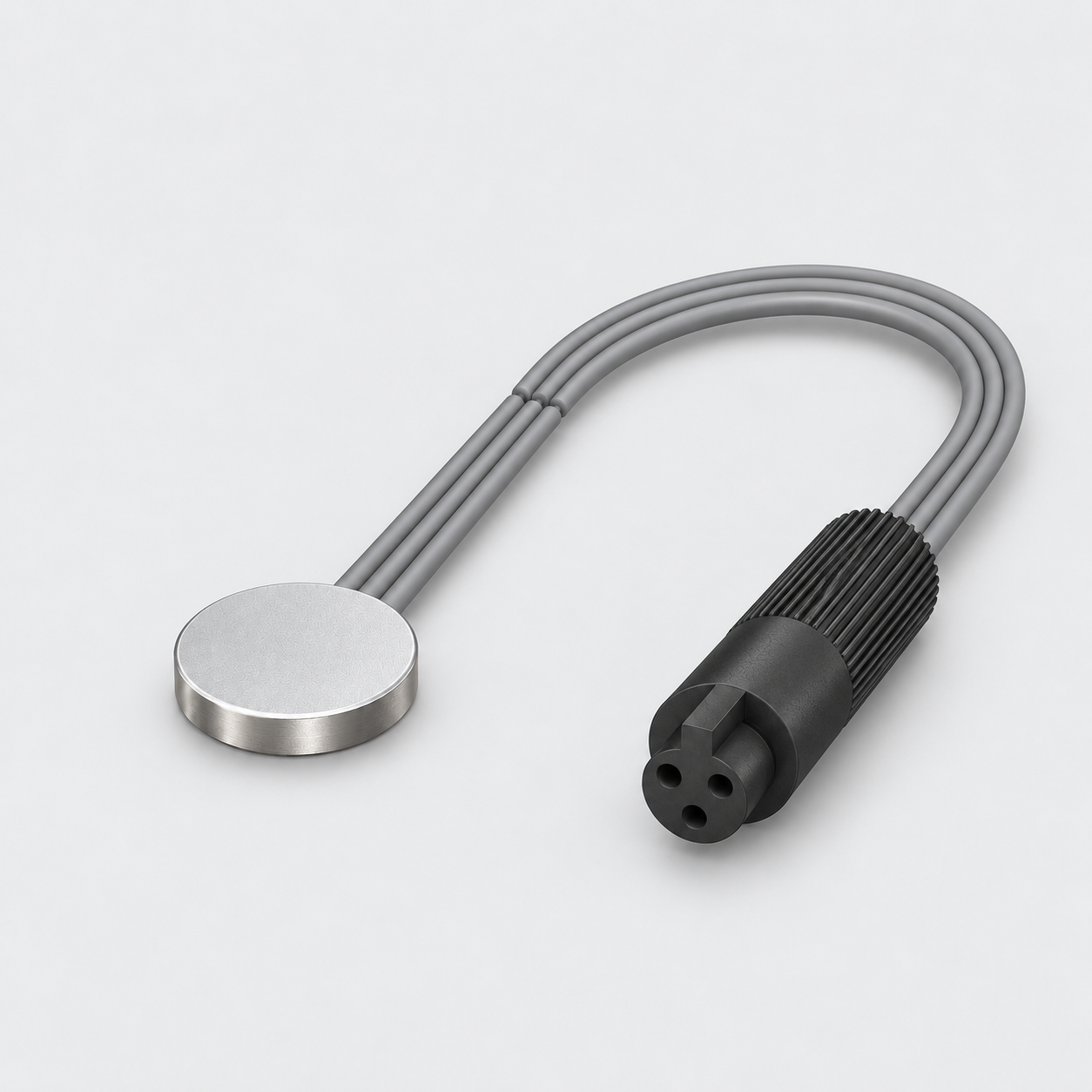
Capacitive sensors

Detects metal, plastic, liquid and powder – even through the container wall

Capacitive miniature and disc sensors that can be installed almost anywhere in a space-saving manner, plus sensors with integrated amplifier from Ø 6,5 to M30 – optionally in a stainless steel housing for the food industry.

Especially flat

Capacitive disc sensors – from only 2,5 mm height

Where there is no room for a cylindrical sensor, our disc sensors are a perfect fit: glued or recessed, they reliably detect objects and fill levels – with adjustable switching distance.

Go directly to the appropriate sensor

All variants with technical data and datasheet as PDF – filterable in the catalog.

Miniature sensors (10)

Cylindrical from Ø 4 × 27 mm, Ø 6,5 × 18 mm, M5 × 27 mm and M8 × 25 mm – flush and non-flush.
View models →
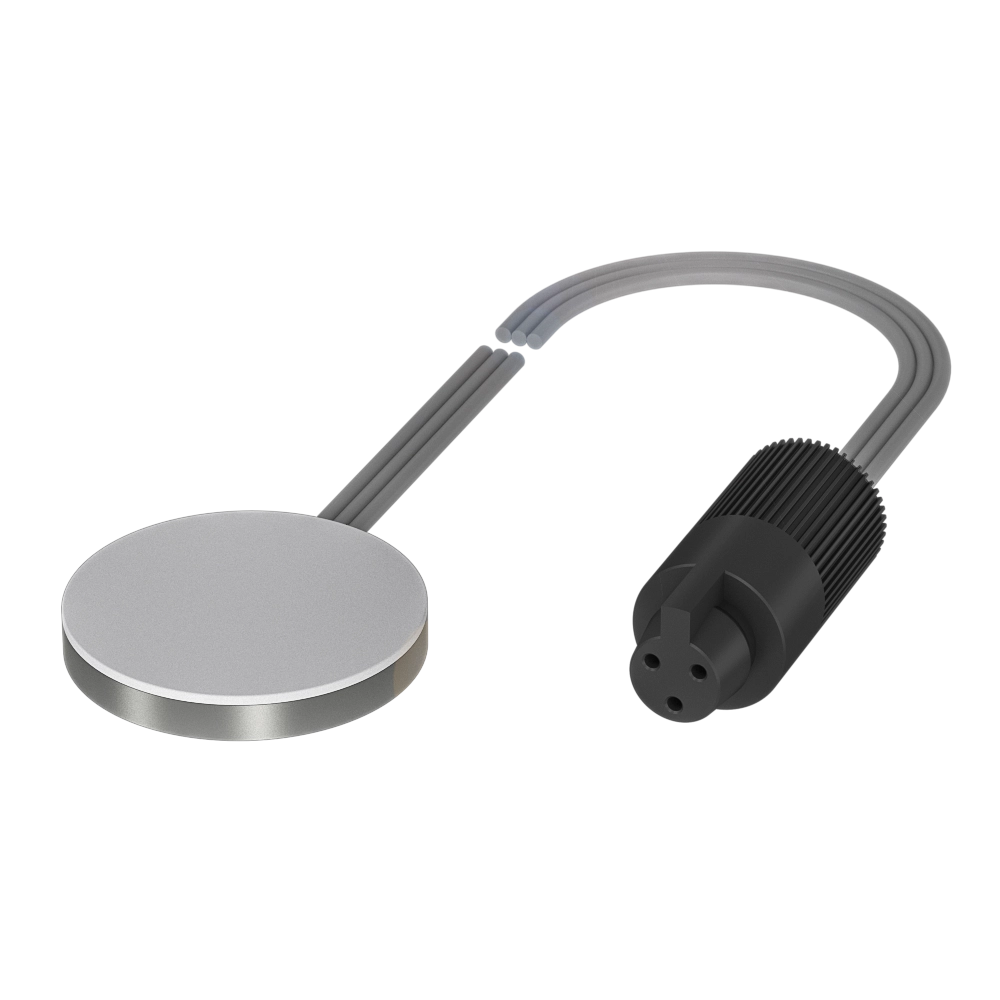
Disc sensors (8)

Flat design from Ø 10 × 3 mm with adjustable switching distance from 2,5 to 15 mm.
View models →
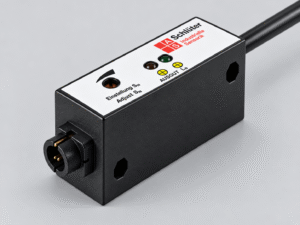
Switching amplifier (4)

Suitable amplifiers with PNP or NPN output, as normally open or normally closed contacts.
View models →

22 capacitive sensors in the catalog – with filter, datasheet and direct inquiry.

Your benefits

Schlüter's capacitive sensors are suitable as presence, level and position sensors.

Sturdy metal housing

Robust for use in machines and systems.

High switching speed

Also suitable for fast processes.

High temperatures

High-temperature resistant versions up to +250 °C.

Adjustable with LED display

Adjust switching distance, status at a glance.

Precise switching behavior

Accurate, reproducible detection.

High quality standard

Carefully manufactured and tested – for over 50 years.

Typical applications

further explanation

In addition to miniature and disc sensors, we offer:

This is how a capacitive sensor works.

The non-contact capacitive sensor converts a distance or fill level into an analog or digital signal. This is based on the change in the electric field in front of its active zone.

When a metal or non-metal approaches this zone, the capacitance changes and the RC oscillator begins to oscillate. The downstream trigger stage switches, and the switching amplifier changes its output state, output current, or output voltage. Available outputs include PNP, NPN, antivalent, normally open, normally closed, or analog (voltage or current).